

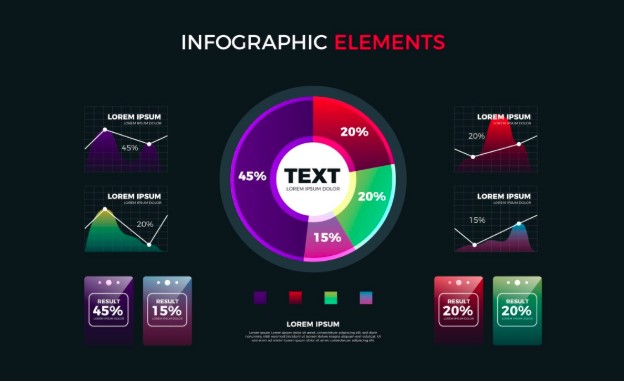
In the modern business landscape, the ability to interpret vast amounts of data is what separates successful marketing campaigns from those that fail to gain traction. Marketing professionals no longer rely on guesswork; instead, they utilize sophisticated dashboards to track progress in real time.
The concept of a visual instrument is central to this process, acting as a bridge between raw numbers and actionable strategy. By transforming complex datasets into intuitive visual representations, businesses can maintain a clear focus on their primary growth objectives.
Simplifying Complex Data Sets for Immediate Clarity
Marketing departments handle an overwhelming influx of information from social media, email campaigns, and website analytics. Without a structured way to view this information, key insights can be lost in the noise.
A digital gauge serves as an essential tool in this environment, providing a snapshot of specific key performance indicators such as conversion rates or customer acquisition costs.
This simplification allows team members at all levels to understand exactly where the campaign stands without needing to sift through thousands of spreadsheet rows.
Facilitating Real Time Decision Making and Agility
The digital marketplace moves at an incredible speed, and a delay in responding to a trend can result in missed opportunities. High-performance dashboards equipped with a digital gauge allow marketers to see fluctuations in engagement or click-through rates as they happen.
This level of visibility enables teams to pivot their strategies instantly, reallocating budgets to high-performing channels or pausing ads that are underperforming. Being agile in this manner ensures that marketing spend is always optimized for the best possible return on investment.
Improving Goal Alignment and Internal Accountability
When goals are abstract, it is difficult for a team to stay motivated and aligned. Visualizing these targets through a digital gauge provides a constant, objective reminder of what the organization is striving to achieve.
Whether the goal is reaching a specific number of new leads or increasing brand sentiment, having a visible needle moving toward a target creates a sense of urgency and shared responsibility.
This transparency ensures that every department understands how their individual efforts contribute to the broader success of the company.
Enhancing Reporting Accuracy for Stakeholders
Communicating marketing success to executives or clients requires a balance of detail and brevity. Stakeholders often prefer high-level overviews that demonstrate value quickly and clearly.
Integrating a digital gauge into monthly reports or live dashboards provides a professional and easy-to-read summary of performance.
It eliminates ambiguity, showing exactly how close the marketing efforts are to reaching the agreed-upon benchmarks. This clarity builds trust between the marketing team and the leadership, proving that the strategy is grounded in measurable facts.
Identifying Trends and Long Term Patterns
While immediate data is crucial, understanding long-term trends is what drives sustainable growth. By tracking the historical movement of a digital gauge over several quarters, analysts can identify seasonal patterns or shifts in consumer behavior.
For example, a steady decline in a specific metric over several months might signal that a particular platform is losing its relevance with the target audience.
Recognizing these shifts early allows a business to innovate and adapt its messaging before the competition catches up.