

The Serengeti does not simply exist. It endures — ancient, indifferent to human timekeeping, and so alive with movement and drama that every hour spent within its borders feels simultaneously too short and perfectly complete.
Introduction
There are places on Earth that exceed their reputation. The Serengeti is one of them. No documentary, no photograph, no traveller’s testimony fully prepares you for the reality of standing on the edge of those infinite plains at first light — the sky turning from charcoal to amber to gold, the grass silver with dew, and the sound of lions fading across the distance as the first wildebeest begin to move. It is a landscape that does something to the human nervous system that is difficult to articulate and impossible to forget.
The Serengeti National Park safari covers 14,763 square kilometres of northern Tanzania, extending northward to the Kenyan border where it connects seamlessly with the Masai Mara National Reserve to form a single, intact ecosystem of approximately 30,000 square kilometres — the Serengeti-Mara ecosystem, one of the largest and most ecologically complete protected landscapes remaining in the world. A UNESCO World Heritage Site since 1981, the Serengeti is the stage for the Great Wildebeest Migration, widely regarded as the greatest wildlife spectacle on Earth, and home to predator densities and wildlife diversity that have made it the defining image of the African safari experience for generations of travellers.
But the Serengeti is far more than the Migration. It is a living encyclopedia of African ecology — a landscape in which every system, from the smallest dung beetle to the largest elephant herd, operates with an integrity and interconnection that has been evolving and self-regulating for three million years. A safari here is not a visit to a wildlife park. It is an encounter with a world that predates and will outlast human civilization, conducted on terms that are ultimately the ecosystem’s own.
This guide covers everything you need to know to plan, prepare for, and fully experience a sangrati safari national park— from the Migration’s seasonal calendar to the park’s zones, wildlife, accommodation, and the practical details that make the difference between a good safari and an extraordinary one.
The Great Wildebeest Migration — The Serengeti’s Defining Spectacle
No feature of the Serengeti captures the imagination more completely than the Great Wildebeest Migration — the annual circular movement of more than 1.5 million wildebeest, 400,000 zebra, and 300,000 Thomson’s and Grant’s gazelle through the Serengeti-Mara ecosystem in an endless pursuit of fresh grass and water.
The Migration is not an event. It is a continuous process, driven entirely by rainfall patterns and the growth of new grass, that positions the great herds in different zones of the ecosystem at different times of year. Understanding this seasonal calendar is the foundation of effective Serengeti safari planning.
January to March — The Calving Season
Between January and March, the wildebeest congregate on the short grass plains of the Southern Serengeti and the Ndutu area of the Ngorongoro Conservation Area, where the rich, mineral-dense soils produce the nutritious short grass that nursing females require. This is the calving season — one of the most extraordinary wildlife events anywhere on Earth — as approximately 500,000 calves are born within a compressed window of two to three weeks, flooding the plains with vulnerable young animals and attracting enormous concentrations of predators.
Cheetahs, lions, leopards, hyenas, jackals, and wild dogs converge on the calving grounds in their highest densities of the year. The predator-prey drama that unfolds is simultaneously heartbreaking and exhilarating — and the sheer scale of new life appearing on the southern plains is a spectacle of biological abundance that has few parallels anywhere in the natural world.
April to June — The Long Rains and Northward Movement
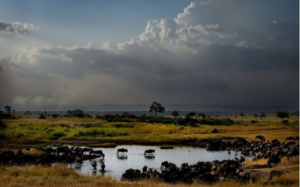
As Tanzania’s long rains arrive in April, the wildebeest begin their northward drift, moving through the Central Serengeti and the Western Corridor in vast, undulating columns that stretch to the horizon in every direction. The landscape is lush and green, the light dramatic with cloud and rain, and the sheer size of the herds on the move — a million animals flowing across the savannah — creates a visual impression of almost incomprehensible scale.
The Grumeti River crossings of the Western Corridor occur during this period, as the northward-moving herds encounter the first of the major water obstacles on their route. Enormous Nile crocodiles that have waited months for this moment lurk in the murky water, and the crossings — though less celebrated than the Mara River crossings of the north — deliver drama of considerable intensity.
July to October — The Northern Serengeti and Mara River Crossings
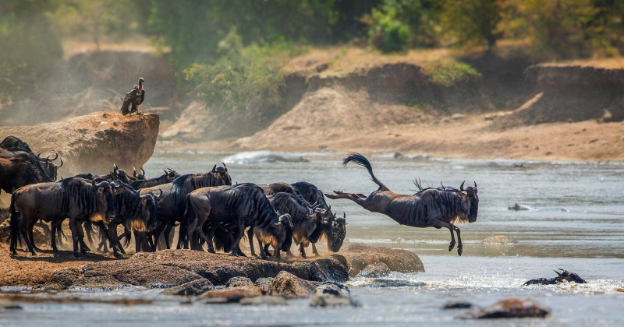
The most celebrated and dramatic phase of the Migration unfolds between July and October in the Northern Serengeti, where the wildebeest herds encounter the Mara River — a fast-flowing, crocodile-dense waterway that must be crossed to access the fresh pastures of the Masai Mara on the northern bank. The crossings are the iconic imagery of the Serengeti Migration: hundreds of wildebeest launching themselves into the river in a chaos of dust and churning water, crocodiles striking from below, and the survivors scrambling up the far bank in a torrent of hooves and desperate energy.
The Lamai Wedge and the Mara River area of the Northern Serengeti are the premier locations for crossing observation, and the period from late July through September represents the peak season for this extraordinary spectacle. Access to the best crossing sites requires either a private vehicle (which can position and wait with flexibility) or residence at one of the exclusive camps in the area that manage vehicle access to the riverbank with careful coordination.
November to December — The Southward Return
As the short rains arrive in November, the wildebeest begin their return movement southward through the eastern Serengeti, completing the annual circuit and returning to the southern plains for the next calving season. November and December offer excellent wildlife viewing with significantly reduced visitor numbers compared to the peak July to October period.
The Serengeti’s Permanent Wildlife — Beyond the Migration
While the Migration defines the Serengeti’s global reputation, the park’s permanent wildlife community is extraordinary in its own right and provides exceptional safari experiences year-round, independent of the Migration’s seasonal position.
Lions
The Serengeti national park safari supports approximately 3,000 lions — one of the largest and most studied lion populations in the world. The park’s open savannah habitat, abundant prey base, and decades of research habituation have produced lions that are among the most visible, approachable, and behaviourally fascinating in Africa. Pride territories overlap the park’s road network in ways that make lion encounters a near-daily certainty on any Serengeti game drive, and the quality of observation — extended sightings of pride dynamics, coalition behaviour, and hunting sequences — is exceptional.
Leopards
The Seronera River area of the central Serengeti is Tanzania’s finest leopard habitat — a mosaic of rocky kopjes, seasonal river courses, and acacia woodland that supports a well-habituated leopard population regularly encountered in the riverine trees that line the drainage courses. Leopard sightings in Seronera are more reliable than in almost any other location in Tanzania, and the animals’ familiarity with safari vehicles allows for extended observation at close range.
Cheetahs
The Serengeti’s open plains support excellent cheetah populations, and the flat, unobstructed terrain makes cheetah hunting sequences — among the most visually spectacular events in African wildlife — highly visible from safari vehicles. The Ndutu area in the south and the Namiri Plains in the eastern Serengeti are particularly productive cheetah territories.
Elephants and Other Mega-Fauna
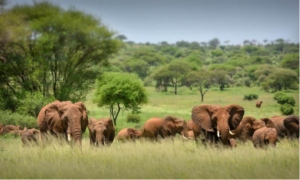
While Tarangire surpasses the Serengeti for elephant density, significant elephant family groups move through the park’s woodland zones year-round. Hippopotamus congregations in the Grumeti and Mara Rivers provide excellent observation opportunities, and the park’s giraffe, buffalo, zebra, and plains antelope populations provide a constant backdrop of wildlife abundance that enriches every game drive regardless of the headline species encountered.
Birdlife
With over 500 recorded species, the Serengeti is a world-class birding destination. Raptors — including numerous eagle species, secretary birds, and the spectacular martial eagle — are encountered year-round. The park’s seasonal wetlands and grasslands attract extraordinary concentrations of migrant waders between November and April. The kori bustard — the world’s heaviest flying bird — stalks the open plains with dignified authority, and the lilac-breasted roller’s brilliant plumage is one of the most photographed wildlife images in East Africa.
The Serengeti’s Zones — Where to Go and When
Southern Serengeti and Ndutu (December to March)
The short grass plains of the south, extending into the Ndutu region, are the premier destination during the calving season. The flat, open terrain provides extraordinary visibility across vast distances, and the combination of massive wildebeest herds, abundant predators, and the drama of the calving season make this one of the finest wildlife experiences in Africa. The area is also exceptional for cheetahs and for the photographic opportunities created by the green season light and the unobstructed horizons.
Central Serengeti — Seronera (Year-Round)
The Seronera area is the heart of the Serengeti’s year-round wildlife circuit, offering the most reliable and consistent game viewing in the park regardless of season. The Seronera River’s leopards, the permanent lion prides of the central plains, and the extraordinary concentration of kopje-dwelling wildlife make Seronera the essential base for any Serengeti safari. The area’s infrastructure — the widest range of accommodation in the park, including several iconic lodges positioned directly on the best game drive circuits — reflects its centrality to the Serengeti safari experience.
Western Corridor and Grumeti (April to June)
The Western Corridor is at its most spectacular between April and June, when the northward-moving Migration herds fill the corridor’s grasslands and the Grumeti River crossings deliver dramatic predator-prey encounters. The area is less visited than Seronera or the north, and its remoteness — requiring a longer drive or domestic flight from Arusha — adds to a sense of exclusivity and discovery that more accessible zones cannot fully replicate.
Northern Serengeti — Lamai and Mara River (July to October)
The Northern Serengeti is the most remote, least visited, and — between July and October — most dramatically spectacular zone of the park. The Mara River crossings, the vast herds massed on the northern plains, and the exclusive private camps of the Lamai Wedge that position guests within walking distance of the river bank combine to create the most coveted safari experience in East Africa during the peak crossing season. Access is primarily by domestic flight from Arusha or from other Serengeti camps, and accommodation should be booked twelve to eighteen months in advance for peak season dates.
Accommodation in the Serengeti
The Serengeti supports one of Africa’s most developed and diverse safari accommodation networks, ranging from public campsites accessible to budget travellers to some of the most celebrated luxury tented camps on the continent.
Public campsites, operated by TANAPA within the park boundaries, offer affordable overnight options at established sites with basic facilities — ideal for budget camping safari groups and adventurous independent travellers.
Permanent tented camps and lodges at mid-range and luxury levels are distributed across the park’s major zones, with the highest concentration in the Seronera area. The finest properties combine architectural sensitivity — structures that minimise their footprint and maximise their integration with the surrounding landscape — with exceptional service, expert resident naturalists, and game drive programmes of outstanding quality.
Mobile and seasonal camps in the Northern Serengeti and along the Migration route relocate seasonally to maintain proximity to the herds, offering guests the most current and productive wildlife access at the cost of more limited infrastructure. These camps represent the cutting edge of experiential safari accommodation — intimate, impermanent, and positioned for maximum wildlife proximity.
Practical Planning for a Serengeti Safari
Getting There
The Serengeti is accessible by road from Arusha — a journey of approximately seven to eight hours to the Naabi Hill Gate, often incorporating a stop in the Ngorongoro Conservation Area — or by domestic light aircraft from Kilimanjaro International Airport or Arusha Airport to one of several Serengeti airstrips, including Seronera, Grumeti, Lobo, and Kogatende in the north. Domestic flights dramatically reduce transfer time and are the standard approach for mid-range and luxury safari packages.
Duration
A minimum of three nights in the Serengeti is recommended to begin to access the park’s depth and variety. Four to five nights allows exploration of multiple zones and provides sufficient time for the patient, unhurried observation that characterises the finest safari experiences. For the northern Serengeti’s Migration crossings, a minimum of three dedicated nights at a Mara River camp, combined with two to three nights in another Serengeti zone, delivers the optimal combination of crossing opportunity and general park coverage.
Best Time to Visit
The Serengeti rewards visits at every time of year, and the “best” time depends entirely on what you most want to experience. For the Migration crossings, July to September in the north is optimal. For calving season drama and predator concentration, January to March in the south. For lush green landscapes and competitive pricing, April to May. For the widest range of wildlife and the most comfortable conditions, June to October across the whole park.
Key Takeaways
- The Serengeti covers 14,763 square kilometres of northern Tanzania and forms part of the 30,000-square-kilometre Serengeti-Mara ecosystem — one of the largest and most ecologically intact protected landscapes in the world.
- The Great Wildebeest Migration is a year-round process rather than a single event, with distinct seasonal phases — calving in the south (January to March), Grumeti crossings in the west (May to June), and Mara River crossings in the north (July to October) — each delivering unique and extraordinary wildlife experiences.
- The Northern Serengeti’s Mara River crossings (July to September) represent the Migration’s most dramatic and celebrated phase, requiring advance booking of twelve to eighteen months for peak-season accommodation at the best Lamai and Mara River camps.
- Year-round wildlife in the Central Serengeti’s Seronera area — including one of Africa’s finest leopard populations, permanent lion prides, and exceptional cheetah viewing — makes the park extraordinary at any time of year, independent of Migration timing.
- The Serengeti supports approximately 3,000 lions and over 500 bird species, making it simultaneously the premier lion safari destination and one of Africa’s finest birding locations.
- A minimum of three nights in the park is recommended for a meaningful Serengeti experience; four to five nights allows multi-zone exploration and the unhurried observation that the finest safari encounters require.
- Domestic flights are strongly recommended for reaching the park efficiently, particularly for the Northern Serengeti, which requires a full day of overland driving from Arusha or a 45-minute domestic flight to Kogatende airstrip.
Questions & Answers
Q: When is the best time to see the wildebeest river crossings in the Serengeti? A: The most reliable window for Mara River crossings in the Northern Serengeti is late July through September, when the wildebeest herds are concentrated in the north and regularly attempt crossings at established sites on the Mara River. The Grumeti River crossings of the Western Corridor typically occur between May and June. It is important to understand that crossing timing is entirely determined by the animals’ behaviour and cannot be guaranteed on any specific day — guests staying a minimum of three nights at a Mara River camp during the July to September peak have a high but not absolute probability of witnessing a crossing. The best strategy is to spend extended time at the river with a knowledgeable guide who can read herd movement and anticipate crossing activity.
Q: How much does a Serengeti safari cost? A: Serengeti national park safari costs span a wide range depending on accommodation tier, season, and duration. Budget camping safaris in the Serengeti cost approximately $200 to $350 per person per day including park fees, accommodation, meals, and guiding on a shared vehicle. Mid-range lodge safaris typically run $400 to $800 per person per day. Luxury and ultra-luxury Serengeti camps — particularly in exclusive concessions and the Northern Serengeti — range from $1,000 to $3,000+ per person per day. The TANAPA park fee for non-resident adults is approximately $70 per person per day and is included within most package rates. Peak season (July to October) commands a premium of 20–40% above low-season rates at most properties.
Q: Is the Serengeti suitable for first-time safari visitors? A: The Serengeti is an outstanding destination for first-time safari visitors and is, for many, the ideal introduction to African wildlife travel. Its exceptional road network, diverse accommodation options at every price point, reliable year-round wildlife, and the professional infrastructure of one of Africa’s most mature safari destinations combine to make it accessible and rewarding for visitors of every experience level. First-time visitors are advised to allocate a minimum of four nights — two to three in the central Seronera area for year-round predator viewing and two in a zone matched to the seasonal Migration position — and to travel with a certified, experienced guide who can deliver the natural history interpretation that transforms good game viewing into an extraordinary educational experience.
Q: Can I do a self-drive safari in the Serengeti? A: Self-drive safaris are technically permitted within the Serengeti for visitors with appropriate 4WD vehicles and valid park permits. However, the vast majority of safari specialists strongly advise against self-drive in the Serengeti for all but the most experienced Africa travellers. The park’s road network is extensive and poorly signposted; navigation without local knowledge is genuinely challenging; and the wildlife encounters that make the Serengeti extraordinary — from locating a leopard in a specific acacia tree to positioning correctly at a river crossing — require guide expertise that no mapping application can replicate. The quality difference between a guided and self-drive Serengeti safari is substantial, and the investment in a professional guide consistently delivers returns that far exceed its cost.
Q: What wildlife besides the Migration can I expect to see in the Serengeti? A: The Serengeti’s permanent wildlife community is extraordinary independent of Migration timing. Year-round residents include approximately 3,000 lions, large populations of leopard (particularly in the Seronera river courses), cheetah on the open plains, elephant family groups in the woodland zones, hippopotamus in the major rivers, giraffe, buffalo, zebra, and the full suite of East African plains antelope including impala, topi, kongoni, eland, and Grant’s and Thomson’s gazelle. African wild dogs are present in small numbers and occasionally encountered, particularly in the south and east of the park. The black rhinoceros has been reintroduced in small numbers in the southern Serengeti and is occasionally sighted. With over 500 bird species, exceptional raptor diversity, and year-round access to one of Africa’s most productive wildlife ecosystems, the Serengeti delivers world-class safari experiences in every month of the year.
Conclusion
The Serengeti national park safari demands something of you that very few places in the modern world still have the power to demand: your full, undivided, unmediated attention. Not the partial attention of a person simultaneously composing a photograph for social media and half-listening to a guide. Not the distracted attention of someone whose mind is still processing the pressures of work and daily life. The complete, present, wide-open attention of a human being who has, for this moment, set aside everything they know and arrived at the edge of a landscape that has been operating in magnificent complexity for three million years.
In return for that attention, the Serengeti gives back with extraordinary generosity. It gives you lions at dawn and leopards at dusk. It gives you the thunder of wildebeest hooves and the silence that follows a successful predator hunt. It gives you the particular quality of African light on grass at the end of the dry season, and the smell of rain hitting dust after a long absence, and the sound of a thousand animals moving across the plain in the darkness before sunrise.
It gives you, in the most honest and non-sentimental sense of the phrase, a sense of perspective — the experience of standing at the edge of something ancient and alive and largely indifferent to your presence, and finding that indifference not diminishing but clarifying.
The Serengeti has been here for three million years. It will, with our commitment and care, be here for three million more.